
Parakite at the Dune du Pilat | Courses, wing tests & proximity flying
Discover a unique way of flying, born from the evolution of paragliding: Parakite, a discipline that redefines dynamic piloting and proximity flying.
FFVL-certified instruction, latest-generation FLARE equipment, and an exceptional setting between ocean and forest.
What is Parakite?
Developed by Flare with the Moustache wing, Parakite is based on an innovative control principle: direct control of the wing’s angle of attack through an integrated pulley system on the risers.
This design provides precise pitch control and introduces a new way of approaching proximity flying.
The result is a dynamic, direct and three-dimensional piloting experience that opens a new chapter in paragliding and turns every flying site into a true playground.
Discipline That Requires a Specific Approach
Designed for pilots drawn to soaring and dynamic flying, Parakite requires a dedicated mindset: adapted piloting techniques, careful wind analysis, fine energy management, and a solid understanding of reflex stability to operate safely.
Key Benefits
- Exceptional 3D handling
- Easy inflation in strong wind thanks to the Depower system
- Reflex stability providing a high level of passive safety
- Strong in-flight safety thanks to a wide usable speed range
Parakite courses at the Dune du Pilat
Discover the first Parakite training courses in France, held on the iconic Dune du Pilat.
Supervised by a state-certified instructor and conducted in coordination with the Fédération Française de Vol Libre (FFVL), these Parakite courses are designed to build solid piloting skills through a progressive teaching approach focused on safety, active control, and the enjoyment of dynamic flying.
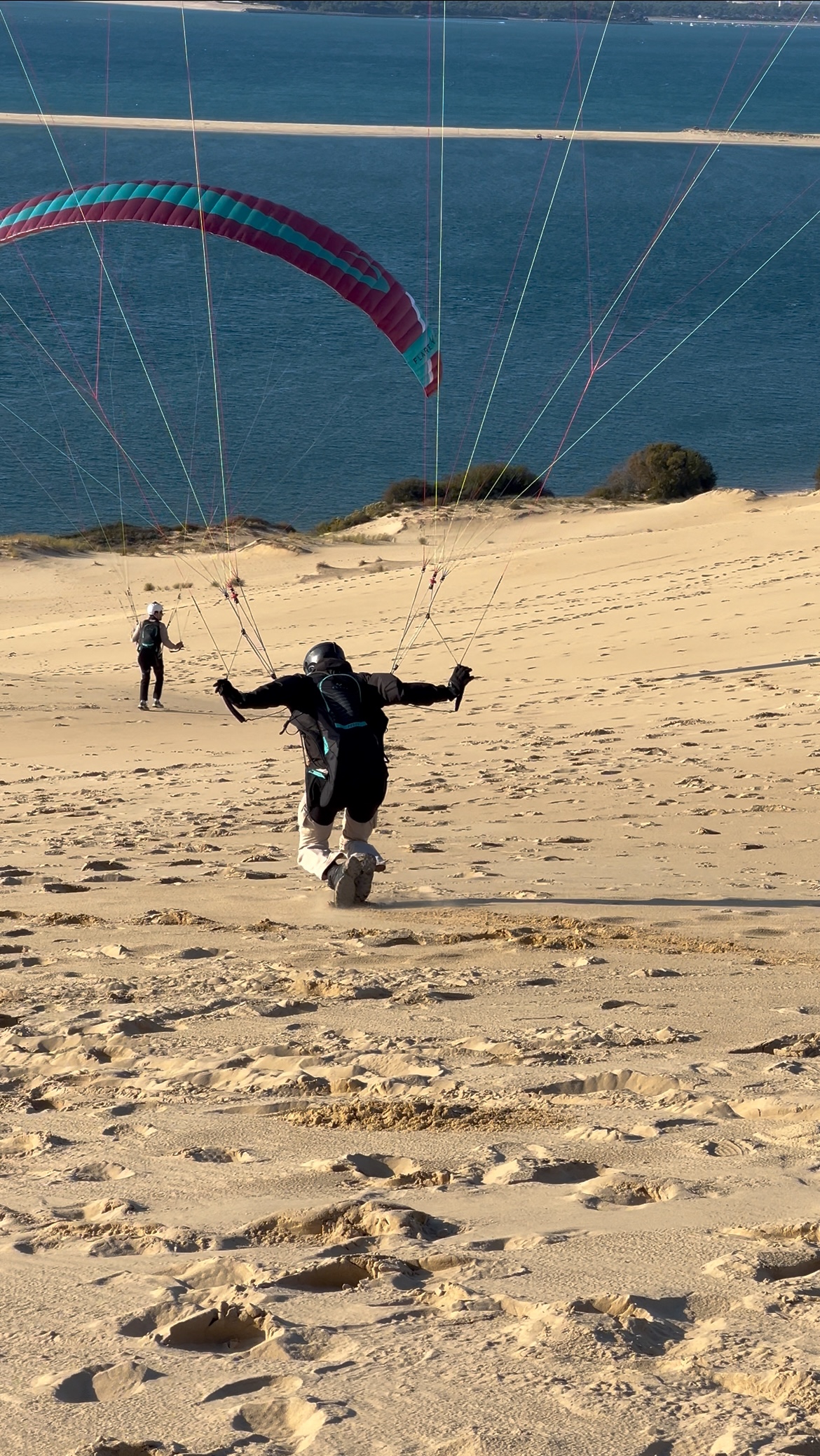
The Dune du Pilat provides an ideal learning environment for Parakite: smooth laminar wind, wide open space, and a progressive slope, allowing pilots to develop precise, fluid and controlled flying close to the ground.
Check upcoming dates and book your Parakite course on the Dune du Pilat, in collaboration with Waggas School.
- Introductory and advanced Parakite courses
- Small groups for effective learning
- New FLARE products to try out exclusively
- Personalized video debriefings after each session
Interested in a course? Let’s talk.
Every pilot follows a unique path — experience, goals, pace and availability.
If you would like to learn more about how the courses are run, better understand Parakite, or discuss equipment options, feel free to get in touch directly.
Parakite equipment by Flare
In-flight safety starts with confidence in your wing: stability, precision and piloting enjoyment.
FLARE, a pioneering Parakite brand and the creator of the Moustache, develops high-performance wings through continuous innovation, designed to deliver safety, control and precision at every phase of flight.
On the Dune du Pilat, you can test FLARE wings, benefit from professional guidance, and choose the equipment best suited to your progression.
The new benchmark for modern parakite.
High perfomance Parakite
Coming soon: Parakite courses abroad
From winter 2026, FlyParakite will offer Parakite trips abroad — Portugal, Chile, and many other destinations to come.
Analysis, technique, equipment and best practices
A collection of in-depth articles to deepen your understanding of Parakite flying: piloting, equipment, sites, conditions and safety.
Paraglide vs Parakite : what’s the difference
New Parakite wing: the Bandit
Parakite: Can You Start without Paragliding Experience ?
Behind FlyParakite: a passion for flying and sharing
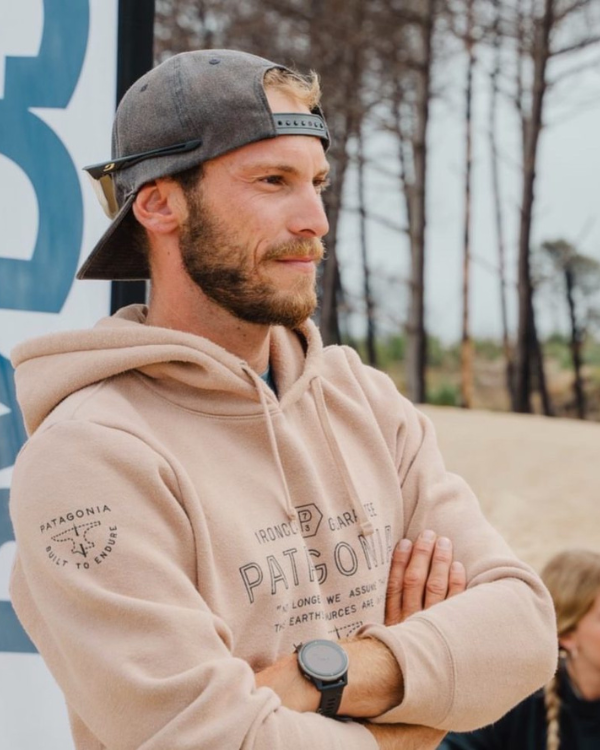
As the founder of FlyParakite, I have been passionate about paragliding for over sixteen years.
With a background in competition and aerobatics, and now flying for FLARE, I have developed a solid technical approach—deeply grounded in flying skills, but always centred on the human aspect.
My role is to support you at your own pace, taking the time to listen to your needs, concerns and goals.
Every pilot progresses differently. My objective is to help you move forward with confidence, safety and enjoyment, in a supportive and passionate learning environment.
Want to follow the FlyParaKite adventure?
New FLARE products, technical tips, Dune news, 2026 travel plans…
Join a passionate group to experience Parakite from the inside.
Questions about the Parakite?
Here are the answers to the questions I am most often asked about courses, the Dune, and practicing parakite.
Can I register directly for a Parakite introductory course ?
Yes. The introductory course is aimed at paragliders with no experience of strong winds, as well as kiteboarders and complete beginners.
We start with the basics: inflation, reading the wind, and controlling the wing, before moving on to dynamic flying in complete safety.
Can I freely register for an advanced training course ?
No. The progression course requires a validated level beforehand.
After you register, we will contact you (by phone or video) to confirm that your level meets the course requirements, so that everyone can progress in a homogeneous group.
Do I need to register somewhere to be able to fly at the Dune du Pilat ?
Yes. Pilots must register on the Parapilat website, which manages access to the site and rules of conduct.
For students enrolled in the course, this registration is not necessary: you are covered by the school’s framework.
For foreign professionals, authorization is mandatory, with a maximum of 14 days of teaching per year on the Dune.
(Parapilat link to be added)
What should I bring for a Parakite course ?
Practice on the dune is often done barefoot.
You must bring:
• Sufficient water
• Sun protection/appropriate clothing
• An approved helmet if you are already a pilot (advanced course)
Parakite equipment is provided as part of the course.
Do you need to have already tried paragliding before starting parakiting ?
No. The introductory course allows you to discover free flight directly through Parakite.
As with paragliding, learning is gradual: the priority is to acquire a solid foundation of control on the ground.
More details can be found in the blog article dedicated to this topic.
What happens if the weather is unfavorable ?
Introductory course (5 days on site): this allows us to select the best days for practice. The other slots can be used for theory.
Progression course (3 days of practice): we stay on site for 5 days to choose the three best days of the week.
Is the Parakite course physically demanding ?
You need to be able to walk in sand, handle a sail, and navigate in windy conditions for several hours.
A “normal” level of fitness is sufficient: you progress at your own pace.
How long does it take to become self-sufficient in Parakite ?
It depends on your profile :
• Experienced paragliders → rapid progress
• Complete beginners → several years to become autonomous in varied conditions
Experience is built up over time: diversity of conditions, analysis, discussions, sharing.
At what age can you start parakiting ?
The minimum legal age is 14 (without parental consent).
As paragliding is a challenging aerial activity, it is important that it is a well-thought-out project and that the young pilot demonstrates seriousness and maturity.
Can FLARE equipment be purchased during the training course ?
Yes. As a FLARE retailer, I can help you choose the right model and size, then provide you with a discount code to order directly from the FLARE website.
Deliveries are fast: 3 to 4 business days in general.
During the courses, the entire FLARE range is available to try out so you can refine your choice.
I do not have permanent stock; only a few wings from the previous year may be available at the start of the season.
Is the introductory course fun ?
Yes! The early stages are great fun: pulling the kite along in the sand quickly gives you a real thrill.
Once you’ve mastered this stage, you’ll soon be flying close to the ground and enjoying some unforgettable experiences.
What is a typical day like on the Dune ?
The day is adapted to wind conditions.
A typical schedule might be:
• briefing around 10 a.m.
• practical session between noon and 2 p.m.
• debriefing from 3 p.m. to 5 p.m.
However, the schedule varies depending on the weather and the energy of the group.