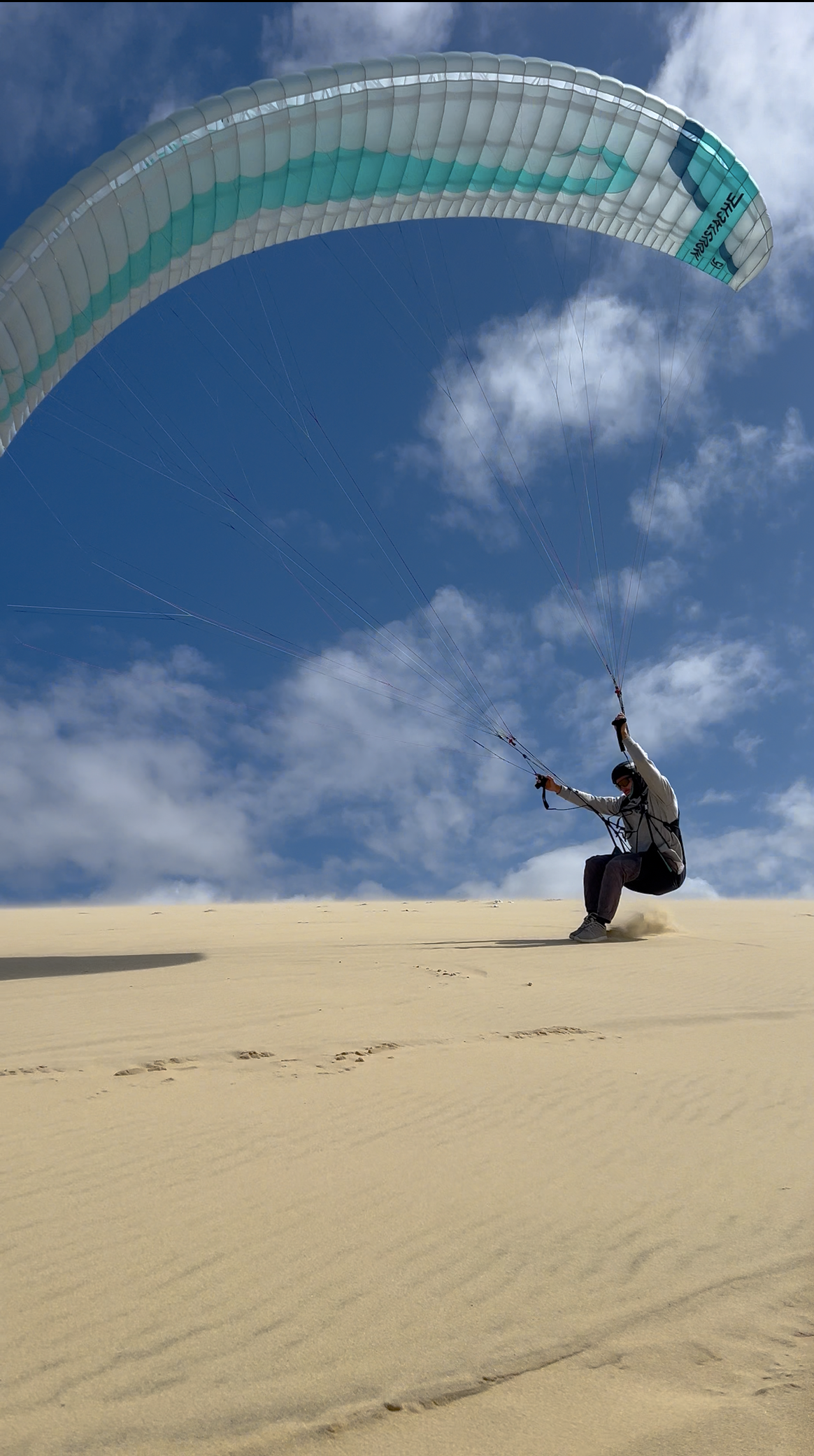
How does the Parakite work ?
The Parakite relies on a specific piloting system designed to act directly on the wing’s angle of attack.
This approach fundamentally changes how speed, energy, and trajectory are managed in flight.
Discover here how Parakite piloting works and how it reshapes dynamic flying.
The Parakite, redesigned piloting
Parakite is an emerging discipline within paragliding.
It introduces a new approach to piloting, based on an innovative control system that acts directly on the wing’s angle of attack.
This technical evolution allows for higher speeds, exceptional three-dimensional maneuverability, and a more dynamic style of piloting.
The result is a faster flying experience, closer to the terrain, opening up a new dimension of proximity flying.
What is a reflex profile?
The trailing edge naturally adopts a shape that “lifts upward”.
This reflex effect creates aerodynamic resistance that stabilizes the wing, prevents it from moving too far forward in the wind window, and greatly reduces the risk of frontal collapses.
➡️ Result: a wing capable of flying fast, with a very steep glide angle, while remaining extremely resistant.
The Parakite control system
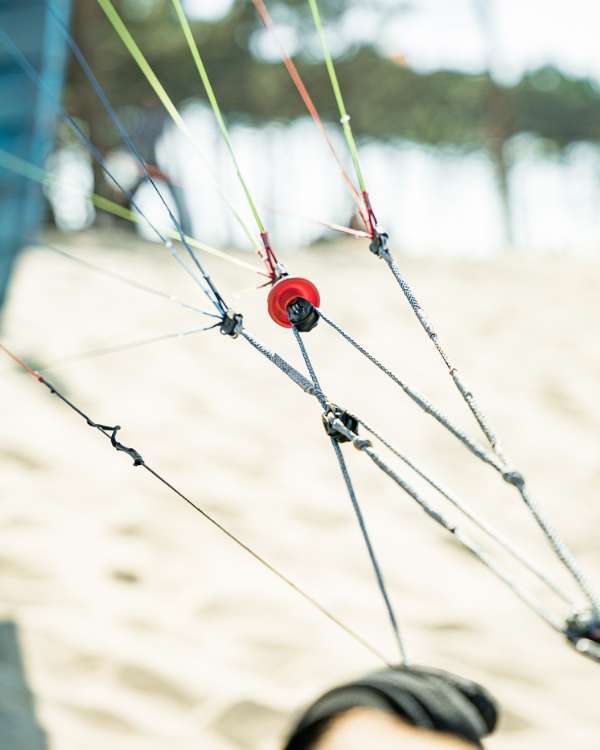
A Parakite riser system is specifically designed to provide direct control over the wing’s angle of attack.
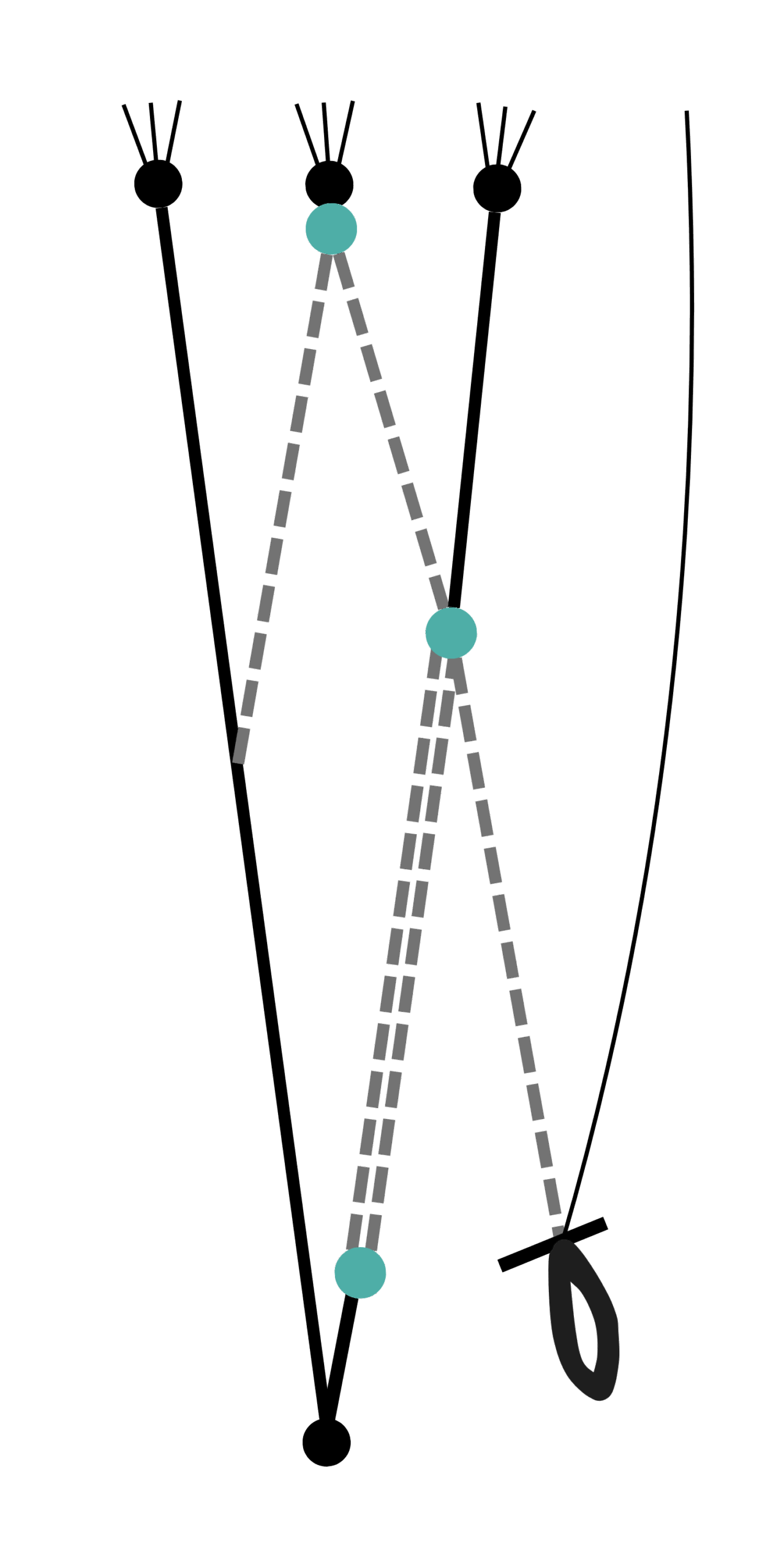
Unlike conventional paragliding, where the brakes mainly act on the trailing edge, Parakite controls act directly on the riser geometry itself, using an integrated pulley system and moving segments.
This design allows the pilot to influence the pitch attitude of the wing in a precise and continuous way, creating a direct link between control input and aerodynamic response.
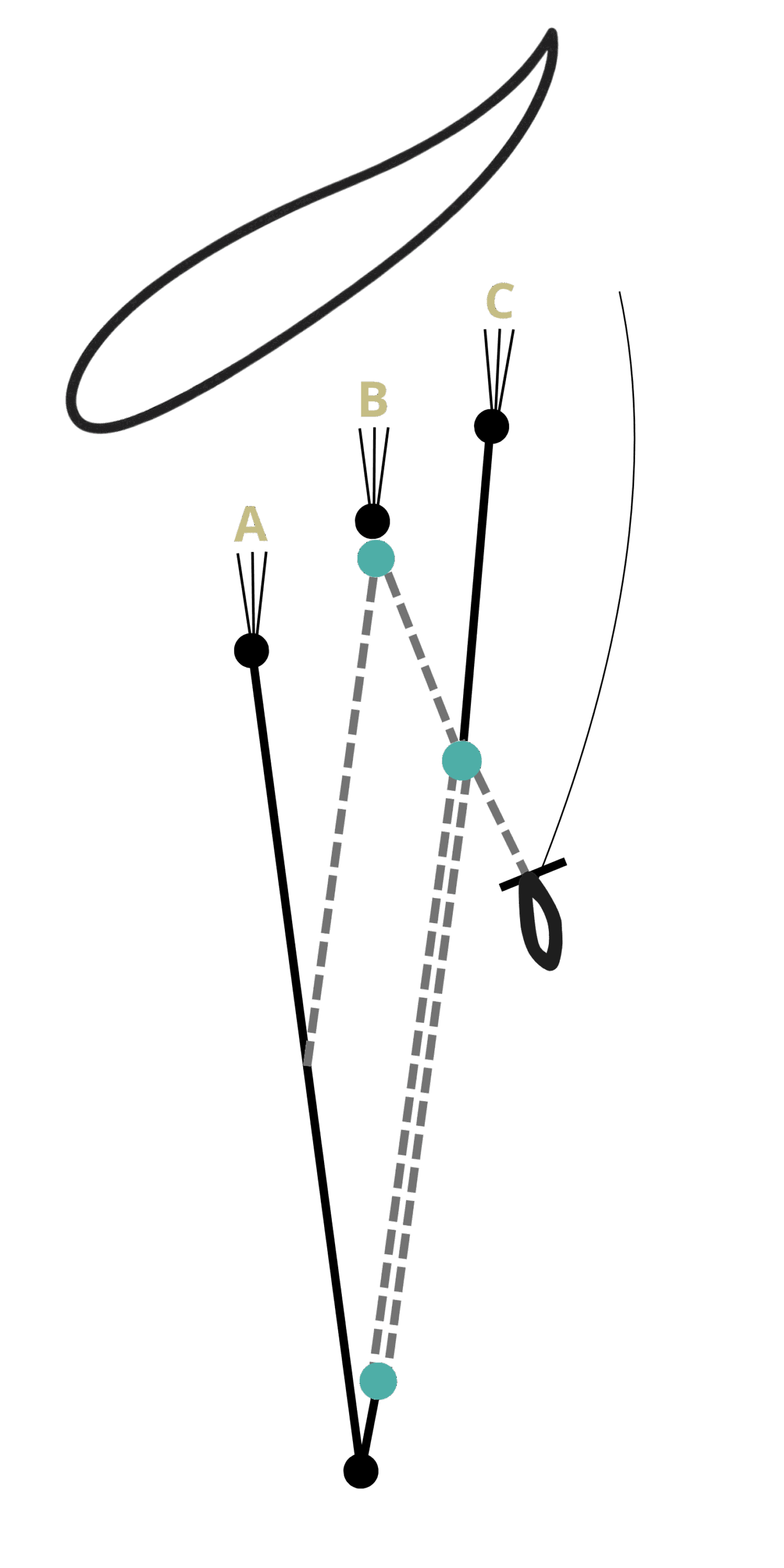
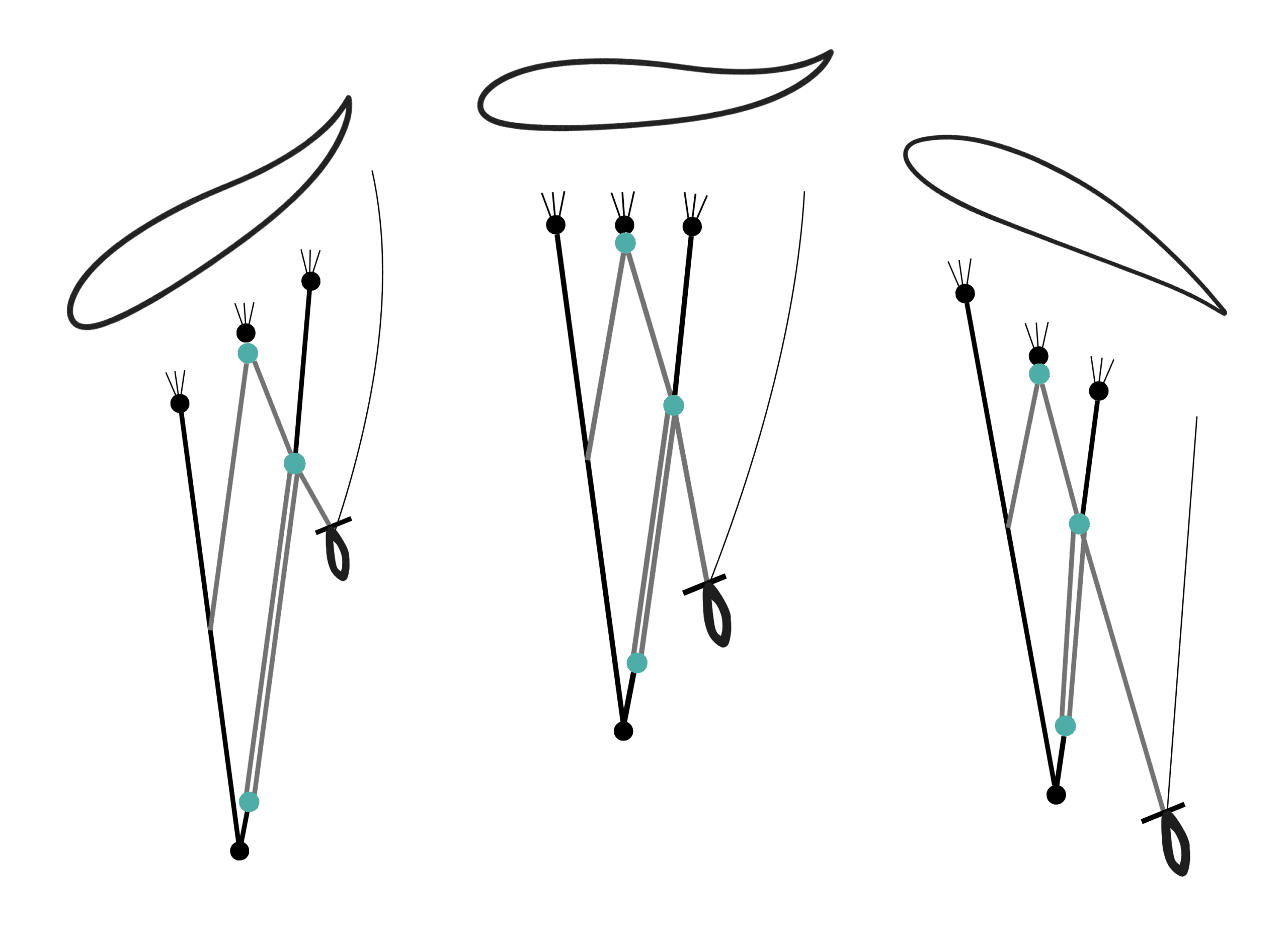
Braked configuration : nose-up flight
The pulley system sets part of the riser in motion:
•the B lines move down relative to the A lines,
•the C lines move down relative to the B lines.
The wing therefore pitches up, causing an increase in angle of attack.
A dynamic control input produces a pronounced energy recovery.
In steady flight, this configuration allows the wing to fly slowly while maintaining a smooth and continuous airflow over the profile, which is essential to prevent stalling.
The camber of the profile, through the brake line (as on a conventional paraglider), only comes into play at the end of the control travel.
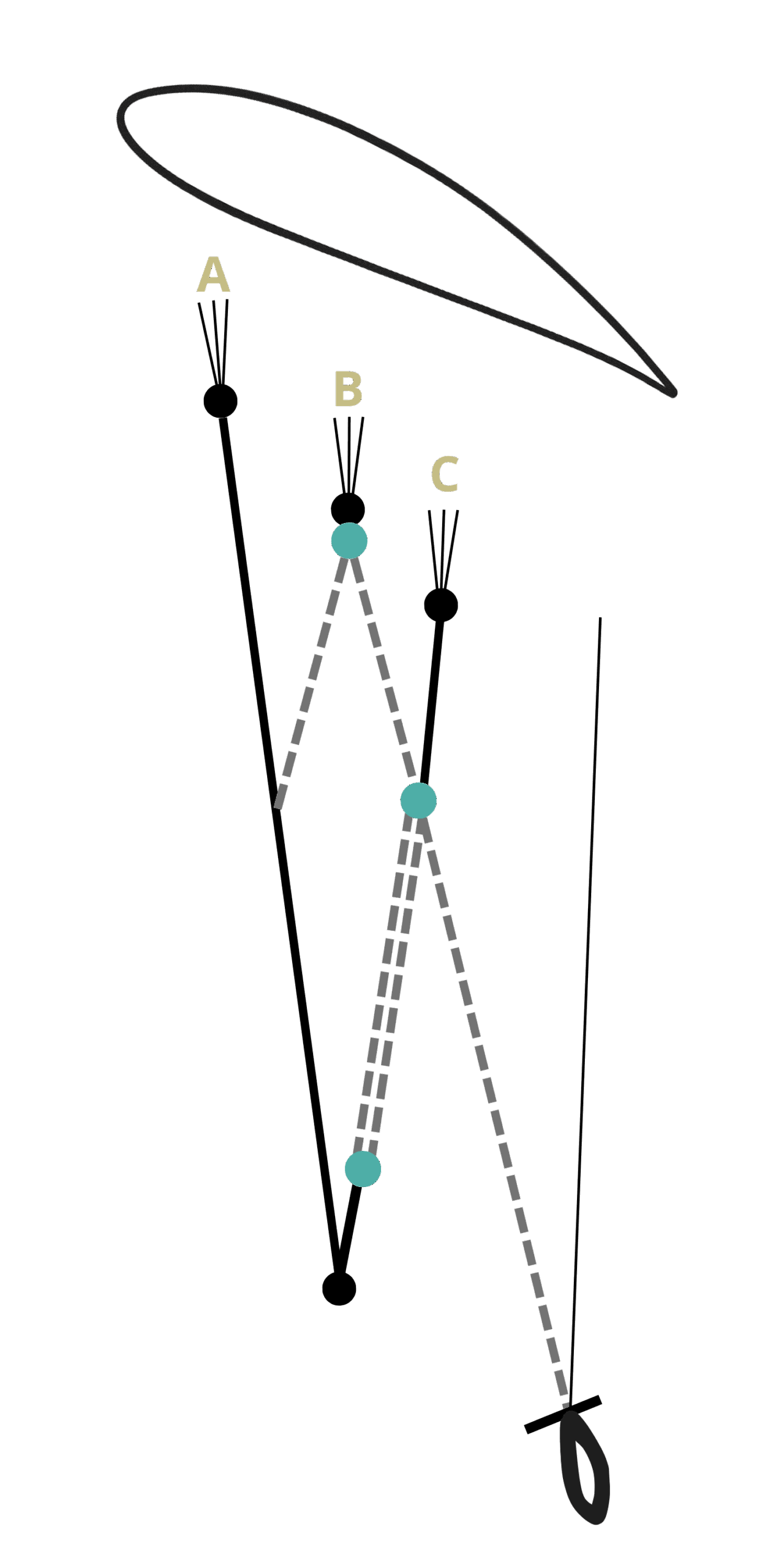
Hands up : dive flight and reflex profile stability
The system operates in the opposite direction:
•the B lines move up relative to the A lines,
•the C lines move up relative to the B lines.
The wing therefore pitches down, causing a reduction in angle of attack.
In steady flight, this configuration allows the wing to fly fast while remaining highly resistant to collapses, thanks to the reflex profile specific to Parakite wings.
In this accelerated configuration, the reflex effect operates at its maximum level.
However, if the trailing edge is curved (brake input, sand trapped in the trailing edge, etc.), the reflex effect is compromised.
This is when a collapse can occur.
Is Parakite right for you?
Skill level, sensations, commitment: let’s take a closer look together.
Parakite : a new dynamic for managing speed, angle of attack, and energy
By combining a nose-up profile, a neutral configuration, and a diving profile, the Parakite uses angle of attack as a true piloting tool.
This refined balance between energy, speed, and trajectory gives the Parakite its unique character and defines its distinctive flying dynamics.
What this dynamic approach makes possible:
- An expanded speed range, from very slow flight to very high-speed flight
- Exceptional pitch precision, ideal for proximity flying
- Immediate responsiveness, without profile distortion
- Outstanding maneuverability, perfectly suited to proximity flying
- Stable behaviour at high speed, thanks to the wing’s reflex profile
Towards mastery
Parakite renews the practice of paragliding through more direct piloting, refined energy management, and a more dynamic, committed style of flight.
Like any technical discipline, it requires a dedicated teaching approach and a structured progression to evolve with both enjoyment and safety.
Within this framework, I actively contribute to the development of Parakite training methodology in France, and several courses are now available, particularly on the Dune du Pilat.
👉 To go further and explore piloting principles, the reflex profile, or the differences with paragliding, discover the dedicated articles on the blog.